



The business landscape in 2025 looks dramatically different from just a few years ago. Artificial intelligence has moved from being a futuristic concept to an essential operational tool that's reshaping how companies compete, scale, and serve their customers. From small startups to Fortune 500 enterprises, organizations are discovering that AI automation isn't just about cutting costs, it's about unlocking new levels of efficiency, intelligence, and growth that were previously impossible.
The AI Revolution in Modern Business
Today's businesses face unprecedented challenges: global competition, rising customer expectations, and the constant pressure to do more with less. AI automation has emerged as the great equalizer, allowing companies of all sizes to compete on capabilities rather than resources alone. What once required teams of analysts, managers, and specialists can now be handled by intelligent systems that work 24/7, learn from data, and continuously improve their performance.
The transformation is particularly evident in e-commerce and digital marketplace operations. Sellers who once spent countless hours manually adjusting prices, monitoring competitor activity, and managing advertising campaigns now leverage AI-powered tools that handle these tasks with precision and speed that no human team could match.
AI-Powered Marketplace Management
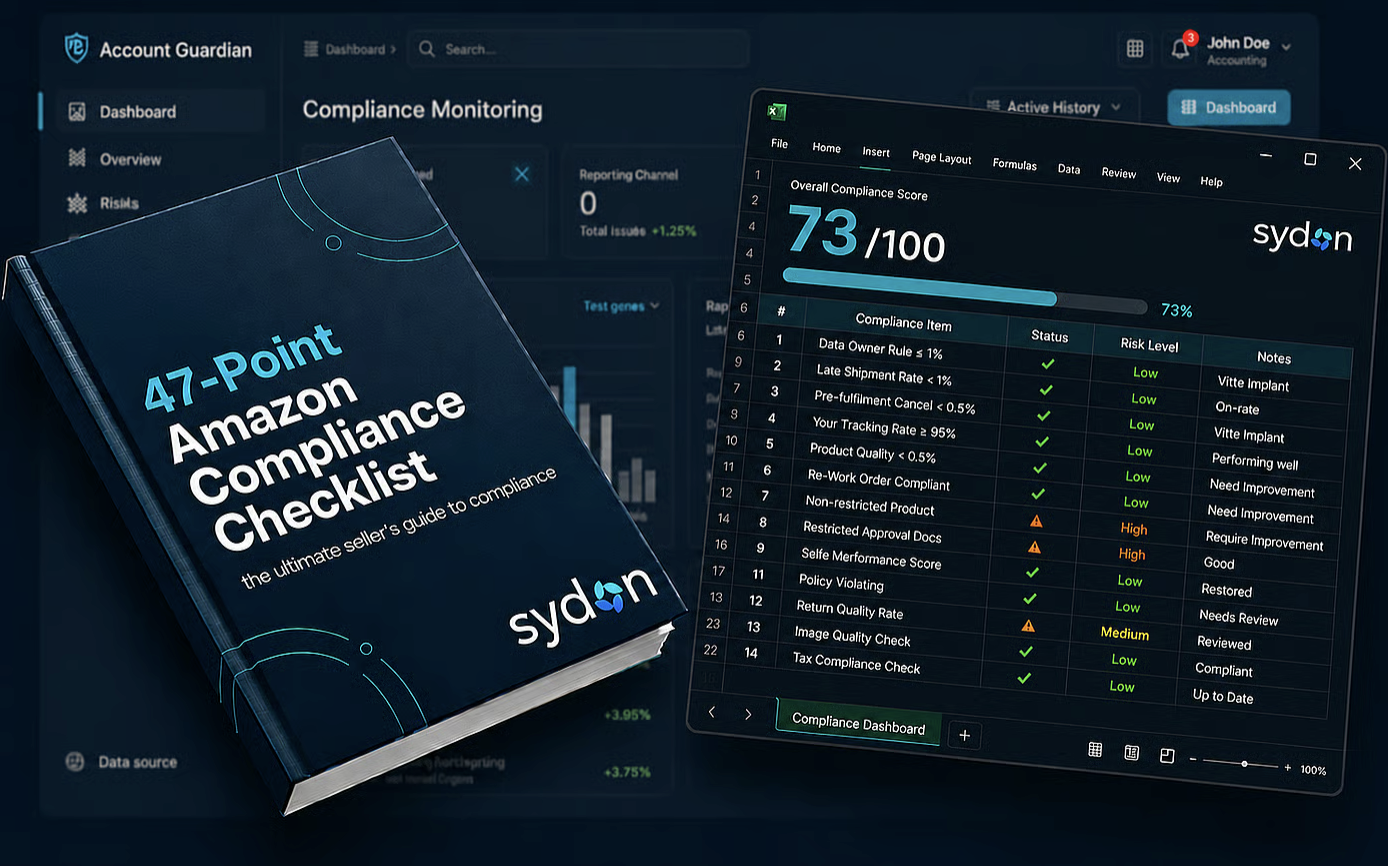
For businesses operating in competitive spaces like the Amazon seller marketplace, AI automation has become nothing short of revolutionary. Managing a successful presence on Amazon requires juggling thousands of variables, inventory levels, pricing strategies, customer reviews, search rankings, and advertising performance. Each decision impacts profitability, and the manual approach simply can't keep pace with market dynamics that change by the hour.
Modern AI systems analyze marketplace trends in real-time, identifying opportunities and threats before they become obvious to human observers. These platforms can detect when competitors adjust their pricing, when seasonal demand patterns emerge, or when specific product features start trending in customer reviews. Armed with these insights, sellers can respond instantaneously rather than discovering opportunities days or weeks after they've passed.
Inventory management has also been transformed. AI algorithms predict demand with remarkable accuracy by analyzing historical sales data, seasonal patterns, external factors like weather or economic indicators, and even social media trends. This means fewer stockouts that lose sales and less excess inventory that ties up capital. The result is a leaner, more profitable operation that responds dynamically to market conditions.
The Game-Changer: Intelligent Amazon PPC Management
Perhaps nowhere is AI's impact more dramatic than in Amazon PPC management. Pay-per-click advertising on Amazon is both incredibly powerful and notoriously complex. With millions of possible keyword combinations, constantly fluctuating bid prices, and the need to balance visibility against profitability, manual campaign management is like trying to solve a Rubik's cube that changes shape every few minutes.
AI-powered PPC management systems have fundamentally changed this equation. These platforms continuously analyze campaign performance across hundreds or thousands of keywords simultaneously, adjusting bids in real-time based on conversion rates, profit margins, and competitive dynamics. They identify which search terms actually drive profitable sales versus which ones simply drain advertising budgets.
The sophistication goes even deeper. Advanced AI systems understand the customer journey, recognizing that some keywords are better for awareness while others drive immediate purchases. They automatically reallocate budgets toward high-performing campaigns while testing new opportunities that could unlock additional growth. What might take a skilled PPC manager hours of daily work is handled continuously and automatically, with decisions based on comprehensive data analysis rather than gut feel or limited manual review.
The financial impact is substantial. Businesses using AI for Amazon PPC management typically see advertising costs decrease by 20-40% while simultaneously increasing sales by optimizing for the right keywords at the right times. It's not unusual for return on ad spend (ROAS) to improve by 50% or more once AI systems have enough data to optimize effectively.
Beyond E-commerce: AI Across Business Functions
While marketplace and advertising automation deliver immediate ROI, AI is transforming virtually every business function. Customer service operations now use intelligent chatbots that handle routine inquiries while seamlessly escalating complex issues to human agents. These systems learn from every interaction, continuously improving their ability to resolve customer problems quickly and accurately.
Financial operations benefit from AI systems that automate invoice processing, detect fraudulent transactions, and forecast cash flow with impressive accuracy. Human resources departments use AI to screen candidates, identify skill gaps within organizations, and even predict employee retention risks before valuable team members start looking for new opportunities.
Supply chain management has been revolutionized by AI's ability to optimize logistics networks, predict disruptions, and coordinate complex delivery schedules across multiple vendors and transportation modes. What once required extensive planning meetings and manual coordination now happens automatically, with AI systems making thousands of micro-optimizations that collectively deliver significant cost savings and improved reliability.
The Competitive Imperative
Here's the reality facing businesses in 2025: AI automation is no longer a competitive advantage, it's a competitive necessity. Companies that embrace these technologies are operating with fundamentally different cost structures and capability levels than those still relying primarily on manual processes. The gap will only widen as AI systems accumulate more data, refine their algorithms, and become more sophisticated in their decision-making.
For sellers in the Amazon marketplace and similar platforms, the stakes are particularly high. The businesses investing in AI-powered tools for marketplace management and Amazon PPC optimization are capturing more visibility, winning more customers, and doing so at better profit margins. Those still managing manually are finding it increasingly difficult to compete on price, advertising efficiency, or operational speed.
Conclusion
The transformation we're witnessing in 2025 is just the beginning. AI systems will continue to become more capable, more accessible, and more integrated into everyday business operations. The question for business leaders isn't whether to adopt AI automation, it's how quickly they can implement these tools and build organizational capabilities around them.
The businesses thriving in this new era aren't necessarily the largest or best-funded. They're the ones that recognize AI as a fundamental operational capability and move decisively to put these tools to work. Whether you're managing a single product line on Amazon or running a complex multi-channel operation, AI automation offers the opportunity to compete and win in ways that simply weren't possible before.
Frequently Asked Questions
Q: How quickly can businesses see ROI from AI automation tools?
Most businesses begin seeing measurable results within 30-60 days of implementation, particularly in areas like Amazon PPC management where AI can immediately optimize campaign performance. However, the full benefits often emerge over 3-6 months as systems accumulate data and refine their decision-making.
Q: Do I need technical expertise to use AI automation for my Amazon seller marketplace operations?
Not at all. Modern AI platforms are designed for business users, not programmers. Most tools offer intuitive interfaces and automated setup processes that can have you operational within hours, not weeks.
Q: Will AI automation replace human employees?
AI typically augments rather than replaces human workers. While it handles repetitive, data-intensive tasks, humans remain essential for strategy, creative problem-solving, and relationship management. Most businesses find that AI frees their teams to focus on higher-value work.
Q: How much does AI-powered Amazon PPC management cost compared to manual management?
Many AI PPC tools operate on a percentage of ad spend (typically 3-10%) or flat monthly fees. When you factor in the time saved and improved advertising efficiency, most sellers find AI management actually costs less than paying for manual optimization while delivering better results.
Q: Is my business too small to benefit from AI automation?
Absolutely not. Cloud-based AI tools have democratized access to sophisticated automation that was once available only to large enterprises. Even single-seller operations can leverage AI for marketplace management and PPC optimization, often seeing proportionally larger benefits than bigger competitors.