01
The delivery-speed bar that changed.
See why the review starts with the delivery dates shown on Prime offer page views, not just whether your warehouse ships on time.

Free Seller Fulfilled Prime checklist for Amazon sellers
The July 6 delivery-speed changes are live. This guide helps Seller Fulfilled Prime sellers review their delivery-speed coverage, core performance metrics, weekend operations, and shipping-data readiness.
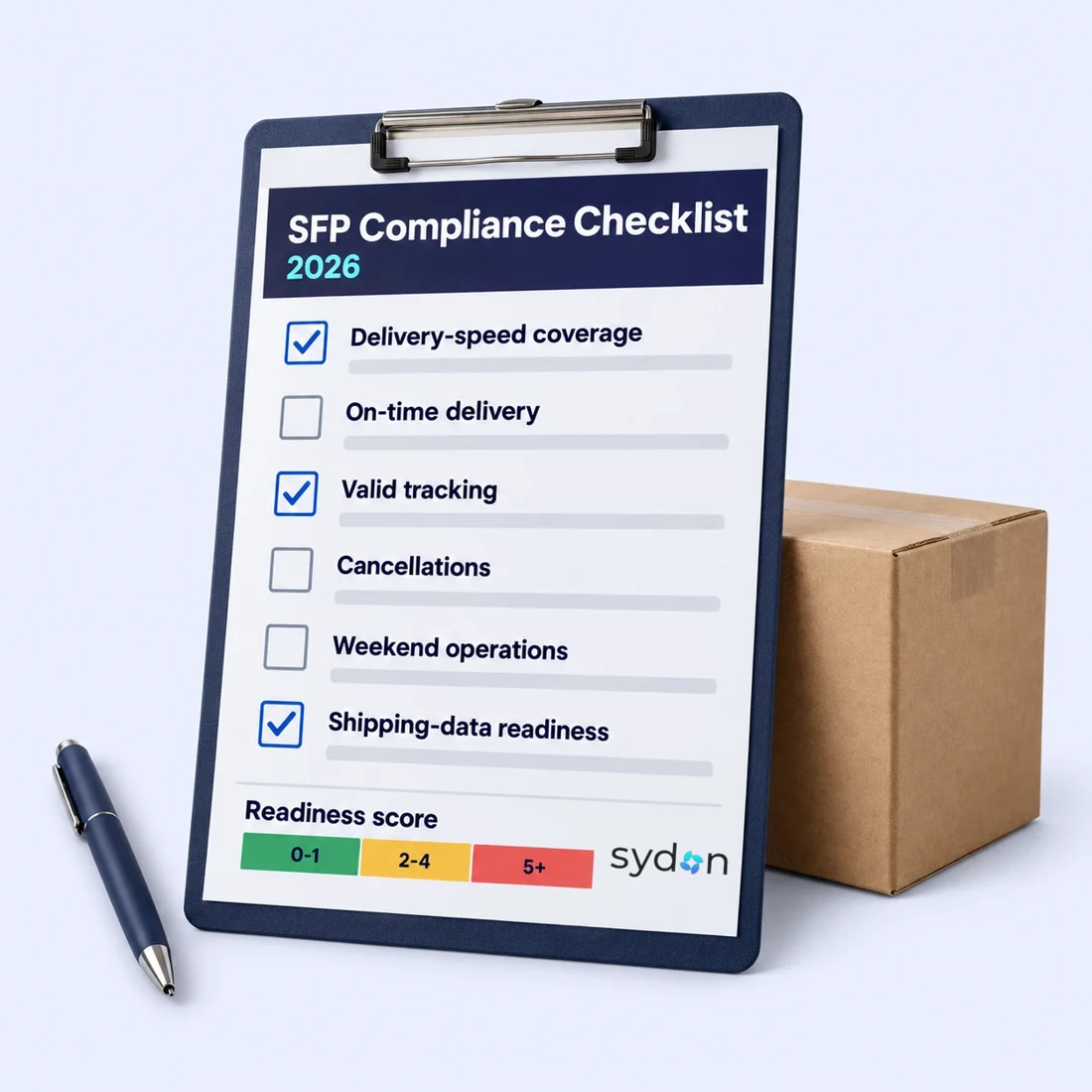
What’s inside
Each section points to a specific place sellers forget to check: the delivery dates shown on Prime page views, the size-tier percentages behind them, the ongoing SFP performance measures, the weekend operations requirement, and the next moves once you find a gap.
01
See why the review starts with the delivery dates shown on Prime offer page views, not just whether your warehouse ships on time.
02
Compare the true all-in cost of each path, before you move a single product.
03
OTDR ≥93.5%, valid tracking ≥99%, cancellation ≤0.5%, monthly SFP volume ≥100, nationwide coverage across 48 states plus DC, and Sat/Sun weekend operations.
04
July 6 (thresholds live) and September 2026 (the new ZIP-code shipping-time tool).
05
One point per open item on the readiness checklist: 0–1 is likely positioned, 2–4 is at risk, 5+ means take action now.
Why this matters
SFP performance depends on more than pack-and-ship. Inventory, service zones, carrier performance, order cut-offs, product size, handling settings, and weekend capacity all affect the delivery date a Prime customer sees.
This guide helps you review those factors before making a larger operational decision. It won’t tell you every SKU should stay in SFP. Instead, it helps identify delivery, coverage, or operational gaps, including the June 29, 2026 handling-time change.
Use it to guide discussions with your operations team, warehouse partner, carrier, or fulfillment provider. Always verify current SFP details in Seller Central before changing shipping templates, delivery promises, or fulfillment settings.
Buy Shipping is optional, not a mandatory requirement. Paired with an eligible Veeqo workflow and Shipping Settings Automation, it can still be worth using: it may qualify an on-time shipment for the "OTDR Protected" designation, which shields your on-time delivery rate from carrier-caused late delivery.
How it works
01
Enter your email and we will send the SFP Compliance Guide to your inbox.
02
Check the page-view delivery-speed percentages that apply to your standard-size, oversize, and extra-large offers.
03
Review coverage, core performance, weekend operations, and shipping systems. Mark what needs an owner or a closer look.
04
Use the guide’s next-step list to focus the conversation with your operations team, warehouse partner, carrier, or fulfillment provider.
Get the guide, see the 2026 delivery-speed review points, and work through the readiness checks with your team.
Operations Manager, a Sydon AI agent, brings orders, late-shipment risk and catalog health into one ranked queue, so you can see what needs attention today.