01
Every message needs a real reason.
Check whether each proactive message is tied to completing an order or answering a real service issue.

Free Amazon review guidelines and buyer-message rulebook for sellers
The Amazon Seller’s Messaging Rulebook gives you seven buyer-message checks, safer and risky examples, and a practical way to review review requests, VA templates, agency scripts, inserts, and support messages.
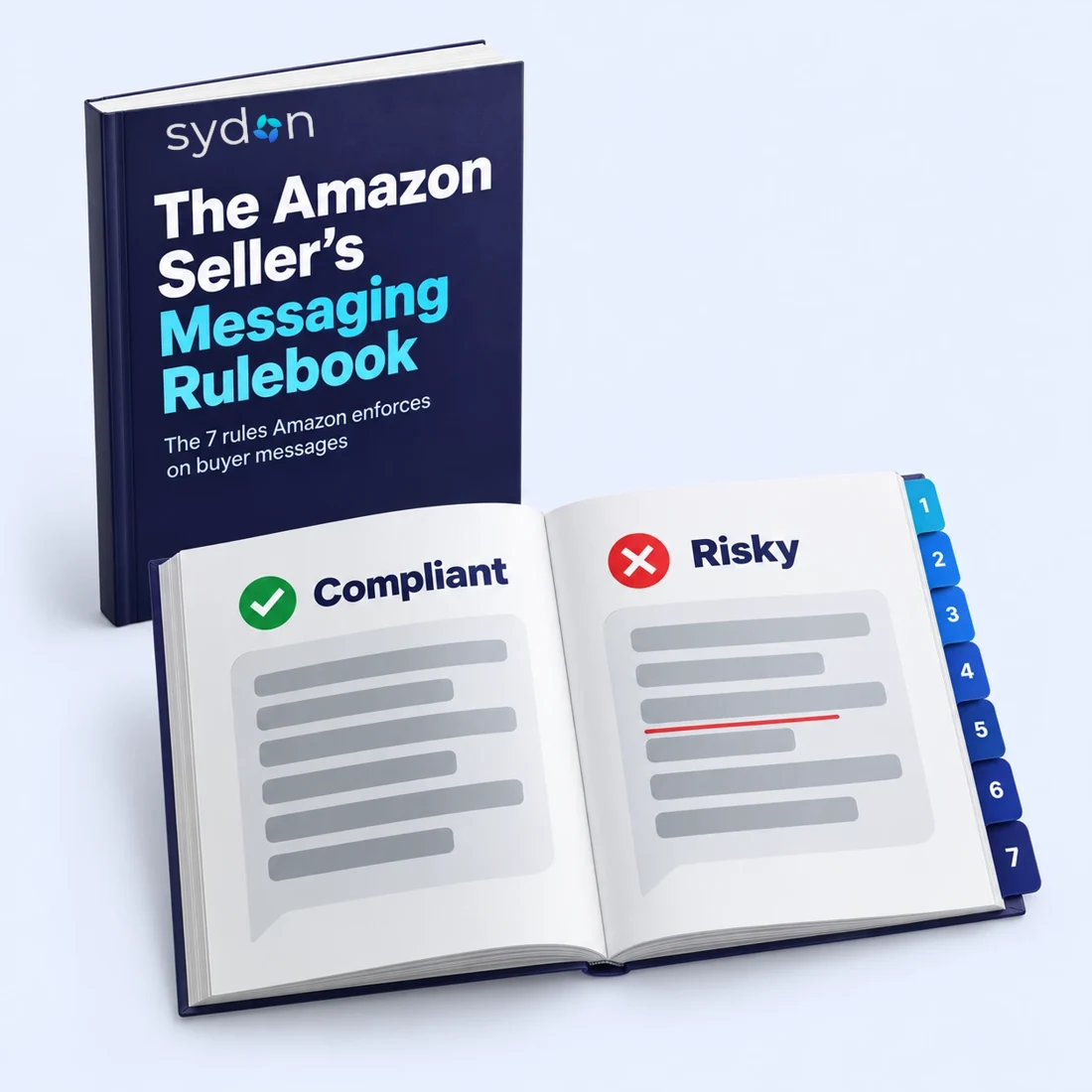
Messaging rules reviewed: September 2026
What’s inside
The rulebook is for sellers who want more reviews without creating review manipulation risk through message content, timing, templates, inserts, blocked messages, accessibility issues, or third-party workflows.
01
Check whether each proactive message is tied to completing an order or answering a real service issue.
02
Catch the missing 17-digit order ID that can make an otherwise simple message noncompliant.
03
Remove star-rating language, coupons, refunds, gifts, or anything that could influence the review.
04
Prevent repeat follow-ups that feel polite but create review-request risk.
05
Review email addresses, phone numbers, external links, product images, accessibility violations, and blocked-message risk.
06
Check emojis, GIFs, extra line breaks, centered text, custom fonts and colors, and oversized images, even when the wording is fine.
07
Send within 30 days of order completion and in the buyer’s language of preference.
Amazon review guidelines for sellers
Messaging rules reviewed: September 2026. Policy guidance can change: verify current Amazon Communication Guidelines before you send.
Why good sellers get flagged
Most sellers who create review risk are not trying to manipulate buyers. They are using old templates, asking a VA to follow up, copying a brand-friendly script, or adding a small insert that sounded harmless.
Amazon messaging rules are strict because message content, timing, incentives, and account-wide patterns can all matter. A seller is still responsible when a third party sends the message on their behalf.
The rulebook gives you the language-level checks your team needs before the next review request, support reply, or insert card goes live.
How to use it
01
Gather buyer-seller messages, Request a Review language, support macros, insert cards, warranty cards, and agency scripts.
02
Compare each template against the rulebook and mark exact lines that need removal or rewriting.
03
Remove rating language, incentives, repeat requests, external links, and anything that could move the buyer off Amazon.
04
Give your VA, agency, or support team one approved template set and a review date.
Use the seven checks to review your live buyer-message templates, then verify current requirements in Seller Central before making a final decision.